Cotton Socks vs Wool Socks: Which Should You Choose?


How to choose between cotton socks and wool socks? Short answer here: choose cotton socks when you want a familiar, soft everyday feel and expect to wash them after each wear. Choose Merino wool socks when temperature changes, longer wear, travel, or odor retention matter more. Neither fiber wins every category: construction, blend, thickness, shoe fit, and care often matter as much as the material named on the label.
Key Takeaways
-
Cotton absorbs moisture readily, but a saturated cotton sock can stay damp in a closed shoe.
-
Merino wool can buffer moisture vapor and generally manages changing temperatures and retained odor better than basic cotton.
-
For sweaty feet, a lightweight construction and a well-ventilated shoe may matter more than choosing the thickest wool option.
-
Blends add stretch, shape retention, and durability, so compare the whole product rather than one headline fiber.

Cotton And Wool Socks At A Glance
|
Factor |
Cotton Socks |
Merino Wool Socks |
|---|---|---|
|
Feel |
Smooth, familiar, and often soft against skin |
Soft for wool, with more loft and fiber texture |
|
Moisture |
Absorbs liquid moisture but can remain wet when saturated |
Buffers moisture vapor and can feel more comfortable across changing conditions |
|
Warmth |
Comfortable for indoor and mild-weather use; depends on weight |
Useful warmth without requiring a very heavy knit |
|
Odor |
Best treated as a one-day, wash-after-wear option |
Often retains less odor during extended wear, though washing is still necessary |
|
Drying |
Can be slower once heavily wet |
Often a better choice for travel and repeated temperature changes |
|
Care |
Usually straightforward; follow the label |
Use a gentle cycle and lower heat as directed by the label |
The Short Answer
For office wear, casual shoes, and readers who prefer a classic cotton hand-feel, cotton is a sensible choice. For walking, travel, cool weather, and days that move between indoor and outdoor temperatures, Merino wool is often the more adaptable choice. If your feet sweat heavily, prioritize a lightweight sock and breathable footwear rather than assuming that more cushioning will solve the problem.
How Cotton And Merino Manage Moisture
Cotton is hydrophilic, so it readily takes up moisture. That can feel comfortable at first, but once the fabric becomes saturated, it may remain damp against the skin and dry slowly inside a closed shoe. Some engineered cotton fabrics use yarn and fabric design to improve moisture transfer, which shows why construction matters alongside fiber content.
Wool interacts with moisture in both vapor and liquid forms. Its fiber structure can buffer humidity changes, helping a well-designed Merino sock feel comfortable across a wider range of conditions. This does not make every wool sock fast-drying or every cotton sock unsuitable for activity; thickness, density, and blend determine the real result.
Which Material Handles Temperature Changes Better
Merino wool is usually the more versatile option when temperatures change. Its crimped fibers create loft, and the material can manage moisture vapor while providing insulation. Cotton can be comfortable in stable indoor conditions and warm weather, especially in a lighter knit, but wet cotton loses comfort quickly in cool conditions.
Which Material Retains Less Odor
Merino wool is generally favored for travel and extended wear because it tends to retain less odor than basic cotton. Still, socks should be washed when visibly soiled, after heavy sweating, or whenever the care label and hygiene needs call for it. Odor performance also depends on shoes, drying, and the rest of the sock blend.
How Blends Change Comfort And Durability
Most practical socks are blends. Nylon or other reinforcing fibers can improve abrasion resistance, while elastane or Lycra helps the sock hold its shape. A high percentage of a natural fiber does not automatically mean better fit. A balanced blend may last longer, stay up better, and feel more consistent after repeated washing.
Best Sock Material By Use Case
|
Use Case |
Better Starting Point |
Why |
|---|---|---|
|
Office and casual daily wear |
Cotton or Supima cotton |
Familiar feel, easy rotation, and a clean look in everyday shoes |
|
Travel with limited laundry |
Lightweight Merino wool |
Useful across changing temperatures and generally lower odor retention |
|
Cool-weather walking |
Merino wool |
Warmth and moisture buffering without requiring a very bulky sock |
|
Close-fitting warm-weather shoes |
Lightweight cotton or lightweight Merino |
Lower bulk is more important than choosing a heavily cushioned version |
|
Boots |
Crew or knee-high Merino |
More coverage and adaptable warmth; make sure the boot still fits without pressure |
|
Sweaty feet |
Lightweight construction plus breathable shoes |
Fiber helps, but ventilation, fit, sock changes, and drying remain essential |

Which MP Magic Socks Should You Choose
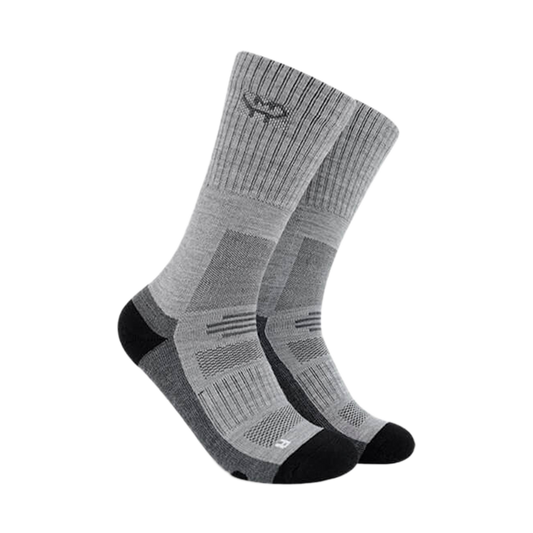
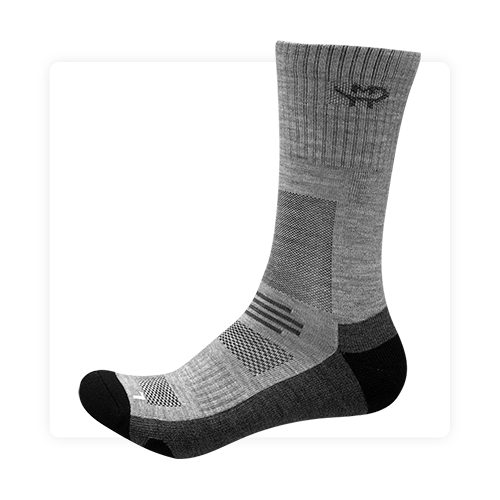
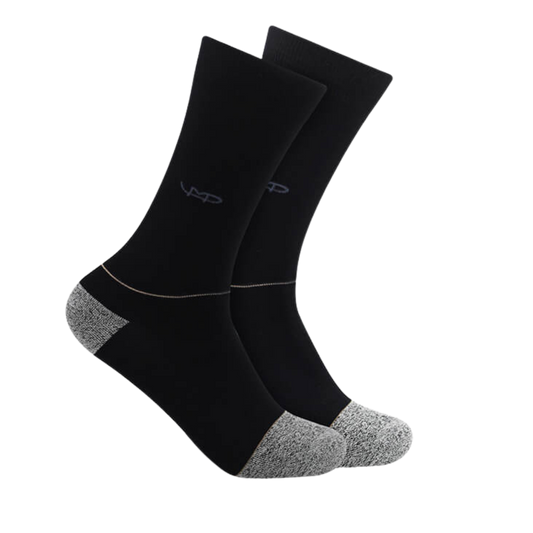
If you want to try Merino without committing to a multipack, our Classic Basic Merino Wool Crew Socks are the easiest entry point, with single-pair and multipack options in gray or black. The construction is more substantial than an ultralight sock, so it suits everyday shoes, travel, and cooler conditions better than very tight summer footwear.
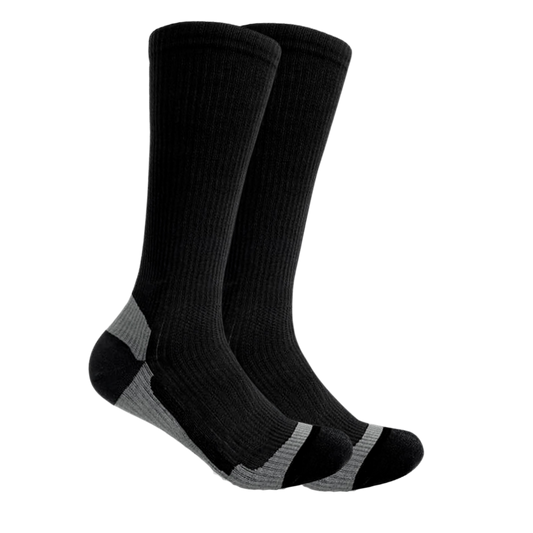
For knee-high coverage, our Compression Merino Wool Knee-high Socks combine Merino content with a compression-style construction. They are a specialized choice, not the default everyday sock. If you have circulation concerns or a medical reason for compression, follow professional guidance first.
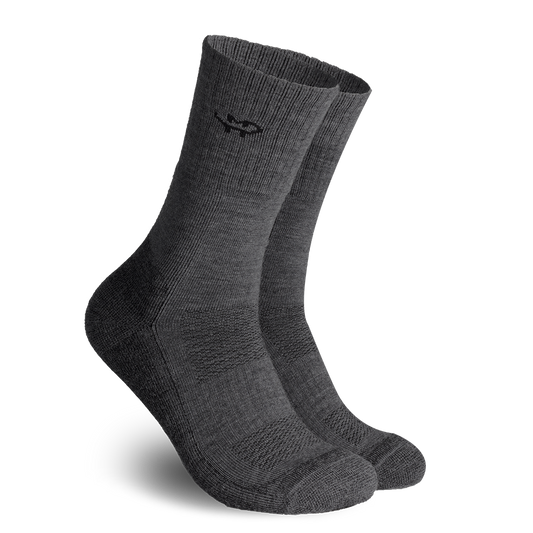
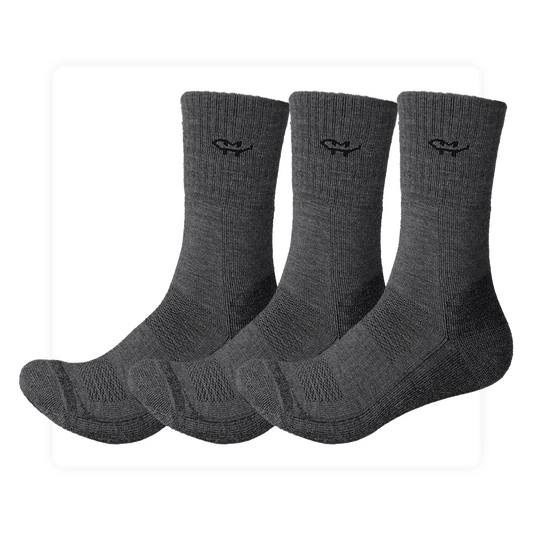
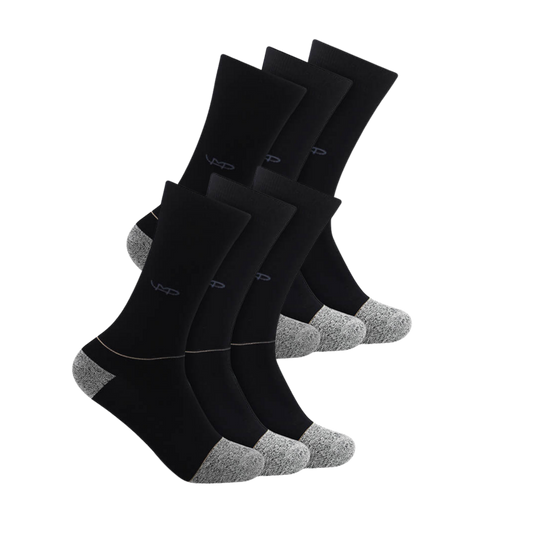
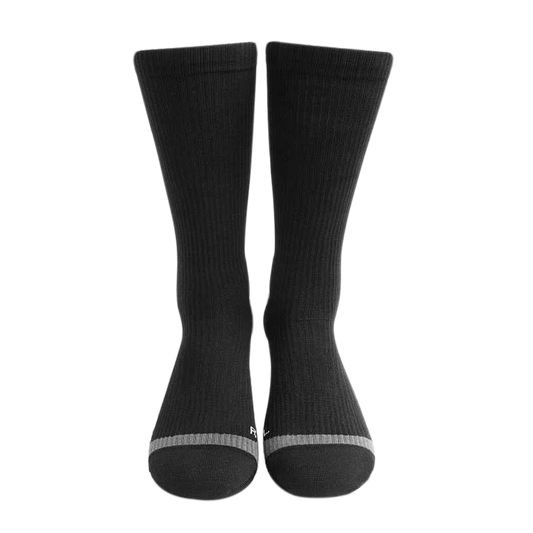
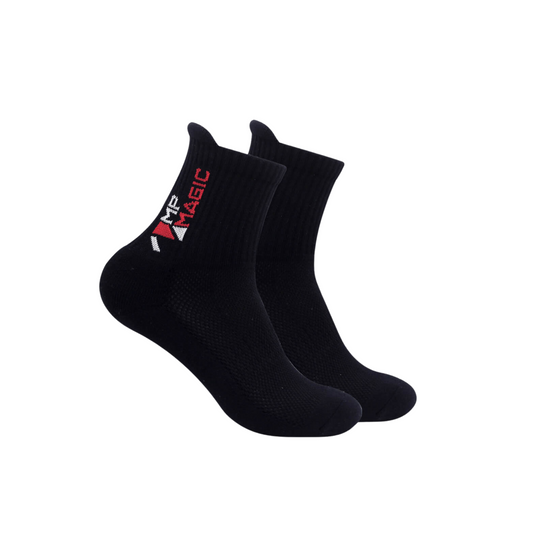
On the cotton side, our MP Magic Cotton Crew Socks are the simplest everyday option: a black, one-size, three-pair crew pack. For more size and color choice, the Supima Cotton Crew Socks come in a six-pair format with M, L, and XL variants in black, gray, white, or mixed options. Both are better treated as regular wash-after-wear socks than as multi-day travel socks.

Cotton Or Wool Socks For Sweaty Feet
For sweaty feet, Merino often has the advantage when the goal is moisture buffering and lower odor retention. However, a thick Merino sock in a tight, unventilated shoe can still feel hot. A lightweight Merino or cotton blend, enough room in the toe box, and a shoe that can release heat may be the better combination. Carrying a spare pair is useful on long days.
How To Care For Cotton And Merino Socks
-
Read the product care label before the first wash.
-
Turn socks inside out when the label permits to help release skin debris from the interior.
-
Avoid excessive heat, which can shrink natural fibers and damage elastic components.
-
Dry socks completely before storage or wear.
-
For Merino, use a gentle wool-appropriate cycle or hand-wash method when the label calls for it.
Frequently Asked Questions
Are Wool Socks Always Warmer Than Cotton Socks
Not always. A thin Merino sock can feel lighter than a thick cotton sock. Fiber, knit density, cushioning, and shoe fit all affect warmth.
Can Cotton Socks Work For Walking
Yes, especially for shorter walks in mild conditions when the sock fits well and the shoe breathes. For long walks, wet weather, or temperature changes, Merino is often more forgiving.
Is Merino Wool Itchy
Fine Merino fibers are generally softer than traditional coarse wool, but sensitivity varies. If your skin is reactive, test one pair before buying a larger pack.
Which Socks Are Better For Summer
Choose by thickness and shoe ventilation. Lightweight cotton can work well for ordinary warm-weather wear, while lightweight Merino can be useful when moisture and temperature changes matter.
The Bottom Line
Cotton is the straightforward choice for soft, familiar daily wear and frequent laundering. Merino wool is the more adaptable choice for travel, walking, cool weather, and variable conditions. Compare weight, blend, height, cushioning, and fit before deciding; the best sock material is the one that matches the whole day and the shoe you will actually wear.