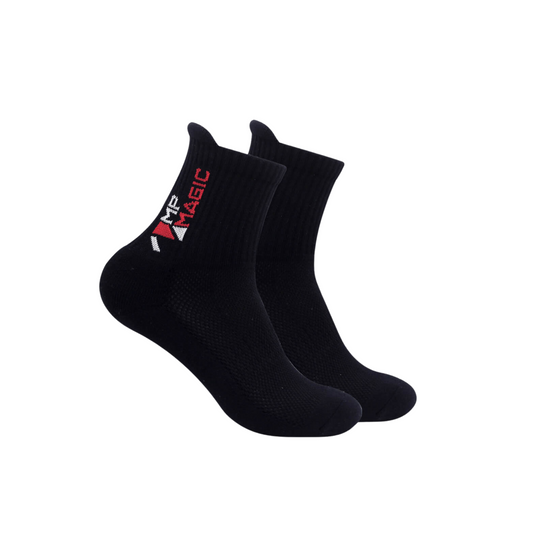
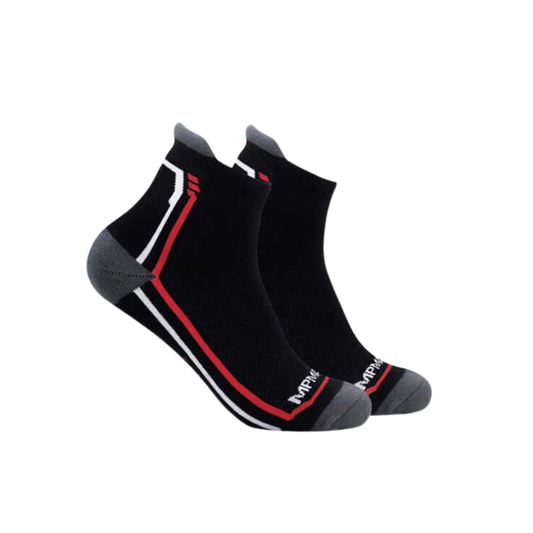
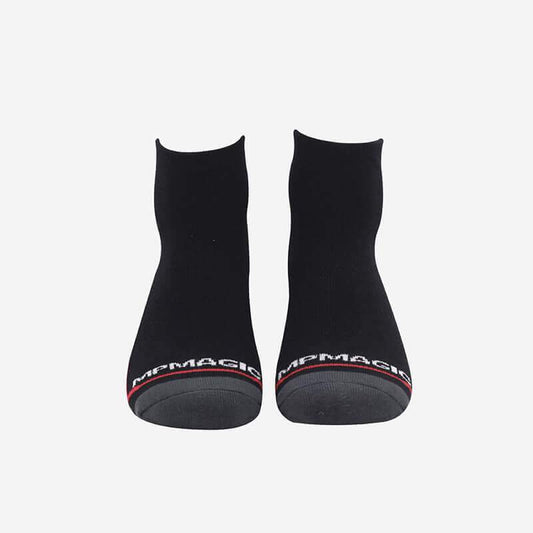
You pull on a pair of sneakers, take a few steps, and realize the sock cuff sits exactly where the shoe collar rubs. Another pair solves that problem but shows more above your shoes than you expected. Small differences in sock height can change both how an outfit looks and how it feels.
Names such as ankle, quarter and crew make shopping easier once you know roughly where each cuff lands. They are less useful when you assume every brand measures them the same way. This guide explains the main sock lengths, compares the heights people most often confuse, and helps you choose coverage for your shoes and everyday routine.
Key Takeaways
- No-show socks sit inside the shoe; ankle and quarter socks provide progressively more coverage around the ankle.
- Crew socks extend onto the lower calf, while knee-high socks reach toward the knee.
- These names describe a general silhouette, not a universal measurement in inches.
- Choose a cuff that clears the contact points of your footwear, then check fit while walking and sitting.
- Sock height does not tell you how thick, cushioned or supportive a sock will feel.
A Sock Length Chart You Can Actually Use
Use the landing points below as a visual reference. Your foot size, leg length and the stretch of the knit affect the final position. Product photographs and any stated cuff measurements are more useful than assuming a label guarantees an exact height.
| Length | Typical coverage | A useful starting point for |
|---|---|---|
| No-show | Below the opening of many low shoes | A mostly bare-ankle look |
| Ankle | Around the ankle, close to the shoe collar | Low sneakers and minimal visible coverage |
| Quarter | Above the ankle, below a conventional crew | Extra collar coverage with a shorter silhouette |
| Crew | Above the ankle onto the lower calf | Everyday sneakers, trousers and some boots |
| Knee-high | Up the calf toward, but below, the knee | Taller footwear or more leg coverage |

What Are Crew Socks?
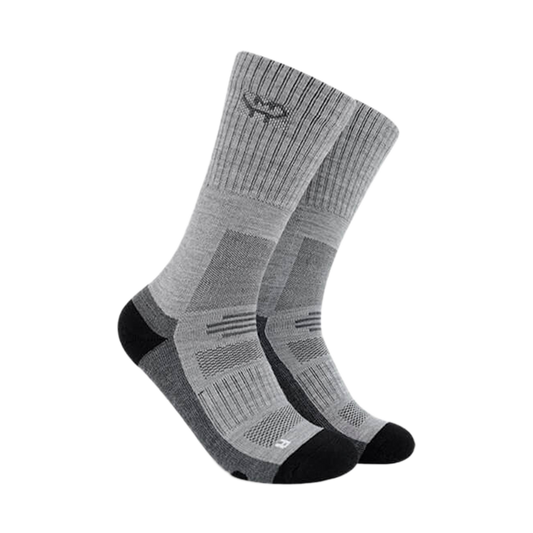
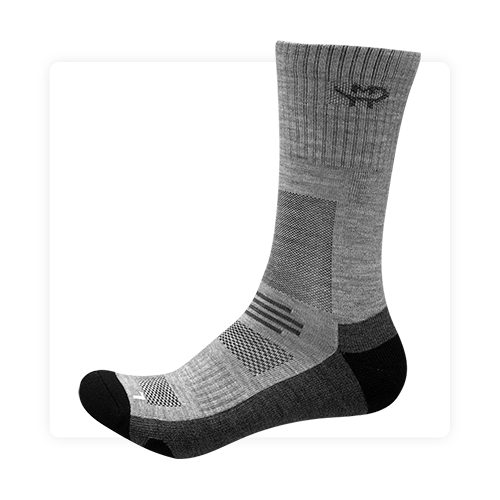
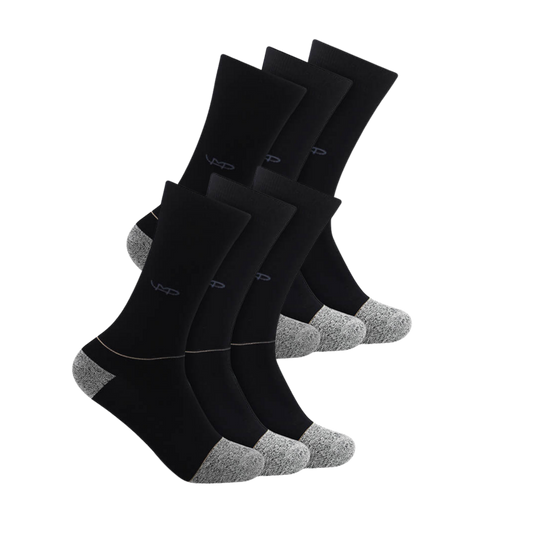
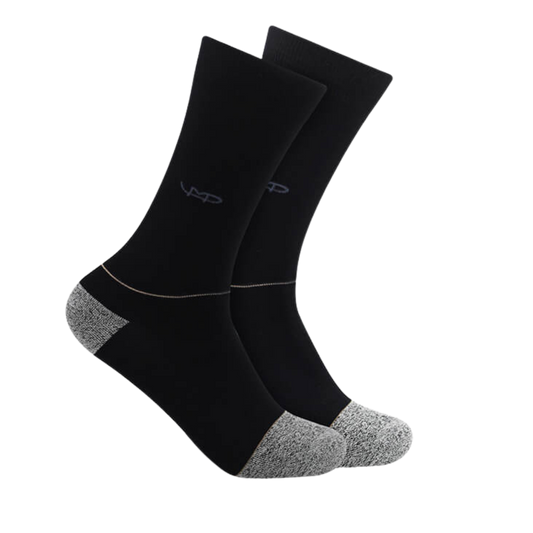
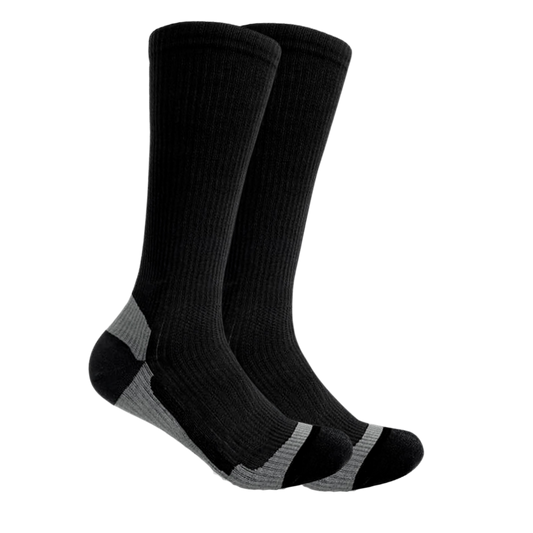
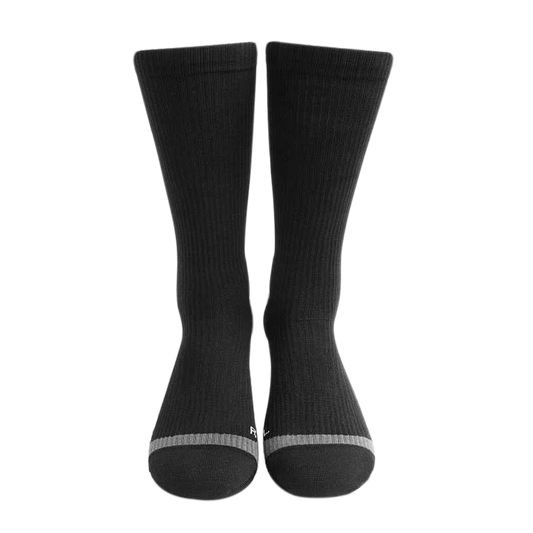
Crew socks have a cuff that rises above the ankle and covers part of the lower calf. That makes them a flexible option for an ordinary week: visible with shorts, mostly covered under trousers, and tall enough to sit above the collar of many everyday shoes.
The word crew describes height rather than a particular fabric or activity. A fine cotton crew and a cushioned wool crew can have similar cuff positions but feel very different in the same shoe. Micro crew and mini crew are additional brand labels; check the actual silhouette instead of treating either as a fixed measurement.
Crew vs ankle socks
The main difference is the amount of ankle and lower-leg coverage. Choose ankle socks when you want a short, visible edge above a low shoe. Choose crew socks when you want more separation between your skin and the shoe collar, more coverage under trousers, or a deliberate sock-and-sneaker look.
A crew is not automatically warmer or better for exercise. Fabric weight, cushioning and shoe ventilation still matter. For a closer look at shorter styles, our ankle socks guide explains how to assess fit around low footwear.
Crew vs quarter socks
Quarter socks occupy the space between ankle and crew lengths. They can be useful when an ankle sock ends too close to a shoe collar, but a full crew feels visually taller than you want. With walking shoes, check the back as well as the sides: a raised heel collar may reach higher than the rest of the opening.
Do not size up a short sock to create extra height. An oversized foot section can leave the heel pocket in the wrong place and allow fabric to gather underfoot. Choose a taller style in the appropriate foot size instead.
Match the Cuff to Your Footwear
Low sneakers and casual shoes
Start with the look you want, then test coverage. A no-show can disappear below the opening, an ankle or quarter can create a small visible band, and a crew becomes part of the outfit. Walk a short distance and check whether the cuff drops beneath the shoe edge. Constant adjustment is a reason to reconsider the cut or fit.
Boots
The sock should extend above the area where the boot collar contacts your leg. Some ankle boots work with crews; taller boots need more height. A cuff that disappears inside a boot can leave skin against the collar even when the sock feels fine around your foot. Our boot socks guide covers thickness and footwear volume in more detail.
Trousers and dress shoes
Try the complete outfit while seated. A trouser hem rises when you bend your knees, so the coverage you see standing in a mirror is only part of the picture. A crew works for many casual and office outfits; a taller style may suit you if you prefer continuous coverage beneath tailored trousers. Our knee-high socks guide explores that option.
Height Is Only One Part of Comfort
Check the heel position, toe space and feel of the cuff before deciding that a different height will solve discomfort. The heel pocket should sit around your heel, the toes should not feel pulled backward, and the cuff should stay in place without needing to be rolled into a tight band.
Construction matters too. In a laboratory study of sock friction, knit structure had a larger effect than cotton-versus-polyester composition under the dry test conditions. The researchers used probes and a skin substitute, so the result is not a promise about how a particular sock will feel during a full day.
MP Magic Crew Socks for Your Daily Rotation
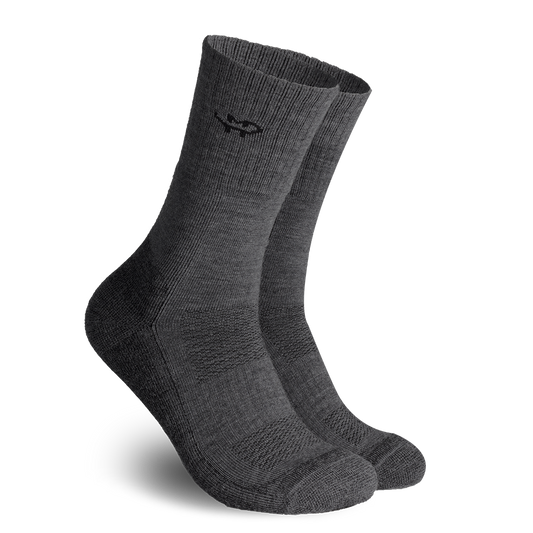
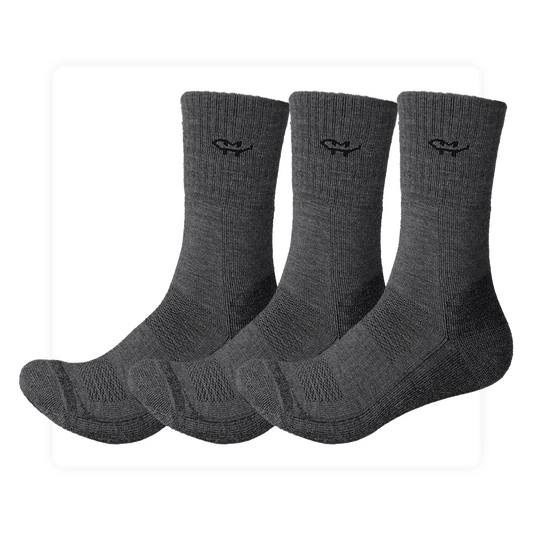
Our Supima Cotton Crew Socks combine 82% Supima cotton with nylon and Lycra for a soft cotton feel with stretch. The crew height works naturally with everyday trousers and a visible sneaker-and-sock look.
If you prefer merino in a lighter construction, our Lightweight Merino Wool Crew Socks pair a merino-rich blend with mesh ventilation. They are a useful option when you want crew coverage without choosing a bulky winter-style sock.

Frequently Asked Questions
How tall are crew socks?
They generally cover the ankle and part of the lower calf. Exact height depends on the brand, size and wearer, so use product measurements when you need a precise landing point.
Are quarter socks the same as ankle socks?
Usually not. Quarter socks generally rise farther above the ankle. Naming overlaps between brands, which is why comparing photos and cuff measurements is worthwhile.
Are knee-high socks always compression socks?
No. Knee-high describes length. Compression is a separate construction and product specification; a tall sock does not automatically provide graduated compression.
Which sock length is best with shorts?
Ankle and quarter socks keep the visible band short, while crews create a more noticeable casual look. Choose the appearance you enjoy, then check shoe-collar coverage and comfort.
Can I fold a crew sock to make it an ankle sock?
You can change its appearance, but the folded cuff adds bulk and may feel tight. A shorter sock in the correct size is usually a simpler way to get less coverage.
Choose the Coverage You Will Use
Start with your most-worn shoes and the place their collars touch your legs. Choose enough coverage for that contact, then decide how much sock you want visible. Once height is settled, compare fabric, thickness and fit to find a pair that works beyond the mirror.