The morning starts with a cold pavement and a long wait for the bus. By lunchtime, the same feet are inside warm office shoes under a desk. A very thick pair of socks can feel reassuring when you leave home, then become the part of the outfit you wish you could change.
Choosing the best socks for winter is easier when you think about the whole day rather than buying the thickest pair available. Your footwear, time outdoors and moisture inside the shoe all affect comfort. This guide explains how to balance warmth and fit, compare winter sock constructions, and choose MP Magic merino styles for ordinary cold-weather routines.
Key Takeaways
- Warmth depends on the shoe-and-sock combination, not only on fiber content.
- A thicker sock is useful only if your footwear has room for it.
- Dry socks and dry footwear matter when you move between warm indoor spaces and cold weather.
- Merino blends are worth comparing for winter, but weight, cushioning and fit remain important.
- Everyday winter socks are not a substitute for footwear selected for prolonged or extreme cold exposure.
Start with the Winter Day, Not the Sock Drawer
A commute followed by an indoor day
If most of your day is indoors, a lighter sock may be easier to live with than a heavily padded pair. Consider how much outdoor protection comes from the shoes or boots themselves. A merino crew that fits comfortably in your work shoes can make more sense than a bulky sock that crowds your toes once you arrive.
When possible, change footwear at work if your outdoor boots are damp or much warmer than you need indoors. Keeping one heavily insulated combination on all day is not the only way to handle a cold commute.
Longer walks in cold weather
Look for secure fit, appropriate coverage and enough cushioning for your shoes. Start the walk in dry socks, and carry a spare pair when you expect wet conditions or an extended day away from home. A useful winter sock should feel comfortable after movement, not only while you stand still in the hallway.
Long periods standing outdoors
Waiting beside a sports field creates different demands from walking briskly to a station. Choose footwear and clothing appropriate to the conditions, rather than expecting socks to supply all the insulation. For prolonged cold exposure, the entire outfit and the chance to get warm and dry matter.
Why More Thickness Does Not Always Help
Padding takes up space. If you add a heavy sock to a shoe that already fits closely, you may lose comfortable toe movement or create pressure over the instep. Try the complete combination with the fastenings adjusted as you would actually wear them.
There is also no benefit in buying an oversized sock just to make it feel less tight. Extra length can wrinkle inside the shoe. Choose a suitable sock size and adjust the thickness or footwear instead.
A practical check is to walk, bend your ankles and use a few stairs. Notice whether your toes can move and whether the sock stays smooth. If you are aware of crowding immediately, do not assume the combination will become comfortable during a longer outing.
Moisture Can Undermine a Warm Setup
A boot can keep outside water away yet still collect moisture from wear. That is one reason a warm-feeling setup can become less comfortable later in the day.
In a thermal foot-model experiment, researchers tested five types of footwear with simulated sweat rates of 3, 5 and 10 grams per hour. Insulation declined as moisture accumulated, with the amount depending on the footwear and sweat rate. This was a laboratory footwear test, not a temperature rating for wool socks or any MP product.
The practical lesson is to pay attention to dampness. Change socks when needed, dry footwear between wears, and avoid dressing far more warmly than the indoor part of your day requires. A fresh sock placed into a still-wet boot may quickly become damp again.

Compare Materials and Construction Together
Merino wool blends
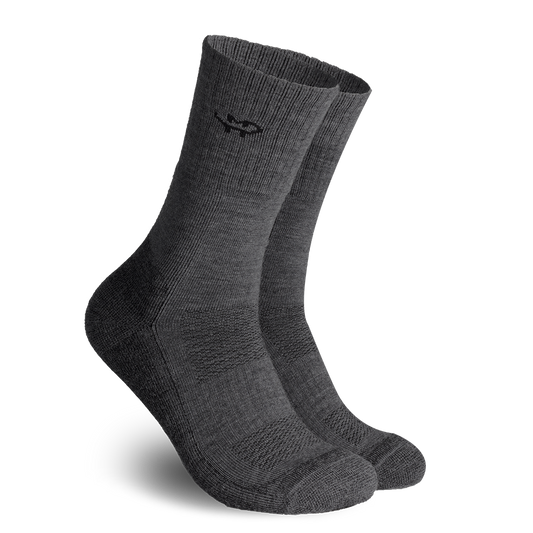
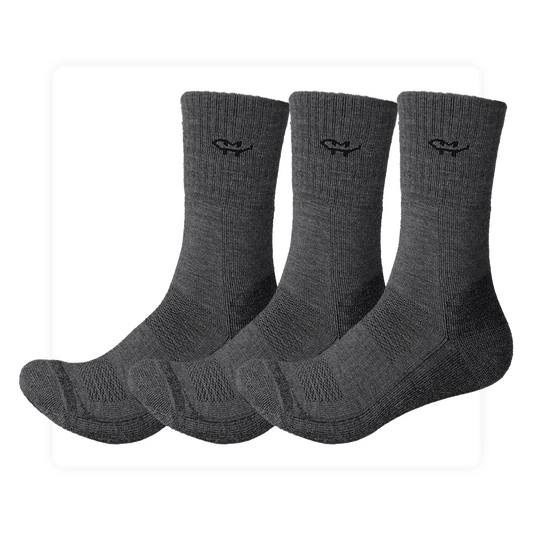
Merino blends are a useful starting point when you enjoy a soft wool feel for winter. Supporting fibers can add stretch and help the sock hold its shape. Compare the actual knit and cushioning rather than treating the wool percentage as a complete warmth rating.
Our merino wool socks guide explains the broader material benefits and tradeoffs. For winter shopping, the next question is whether that specific pair fits your footwear and the way you spend the day.
Cotton-rich socks
A cotton-rich pair may be comfortable for an indoor winter routine. If it becomes damp during outdoor activity, however, the moisture can be inconvenient when you return to the cold. Keep the activity and drying opportunities in mind rather than excluding or choosing a material solely by season.
Synthetic blends
Synthetic fibers appear in many winter socks, including wool blends. They can contribute stretch, durability or moisture-handling properties depending on the yarn and construction. A fine synthetic liner and a thick thermal sock are very different products, even if both include polyester or nylon.
Choose Height and Cushioning for the Shoe
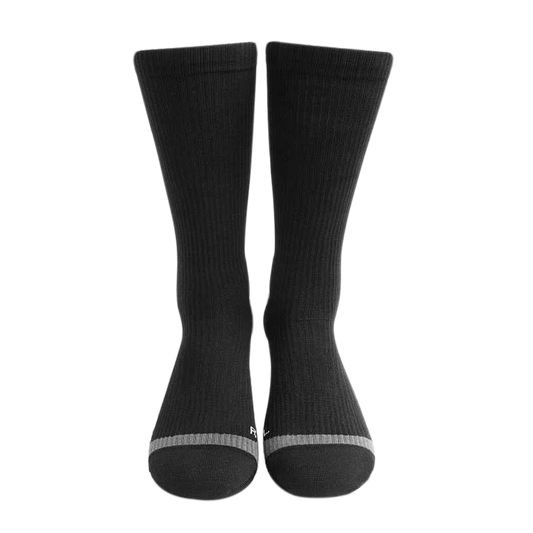
A crew can work with everyday shoes and some ankle boots. Taller footwear needs enough sock height to cover the contact area around the collar. Avoid folding a tight cuff into a thick band just to make a taller sock shorter.
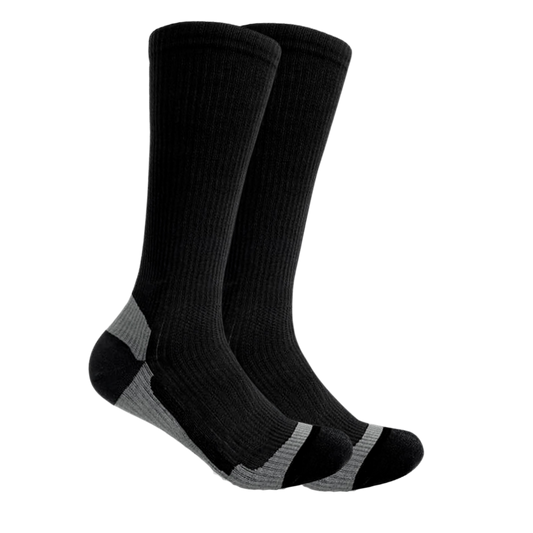
Targeted cushioning can be useful where you enjoy a fuller feel, provided it does not crowd the shoe. If boots are your main winter footwear, our boot socks guide focuses on collar height and boot volume. For skiing, use the separate ski socks guide, because ski-boot fit needs its own assessment.
MP Magic Merino Socks for Winter Routines
Classic 2.0 for a cushioned crew option
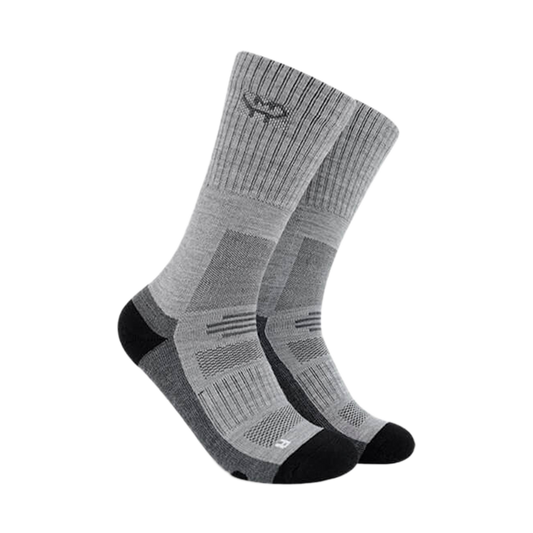
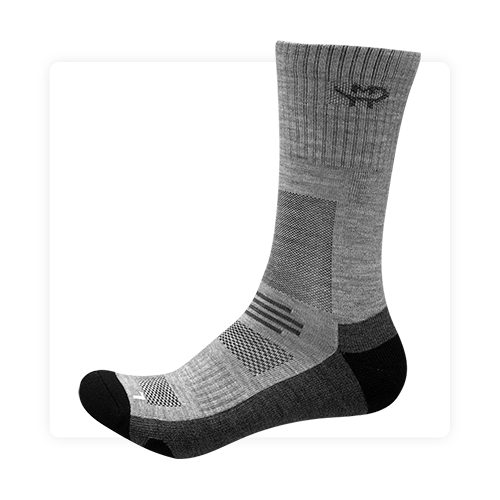
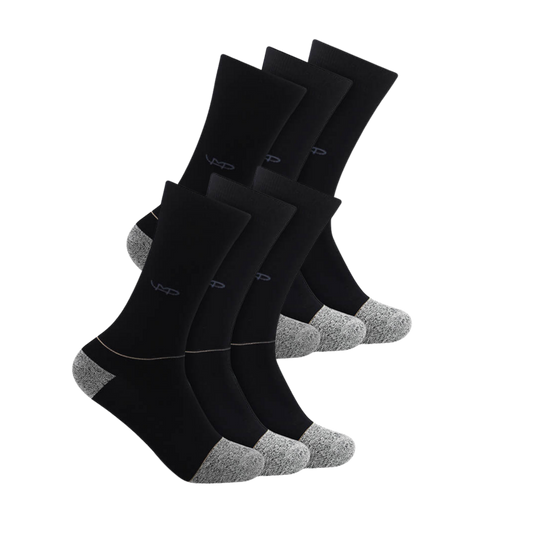
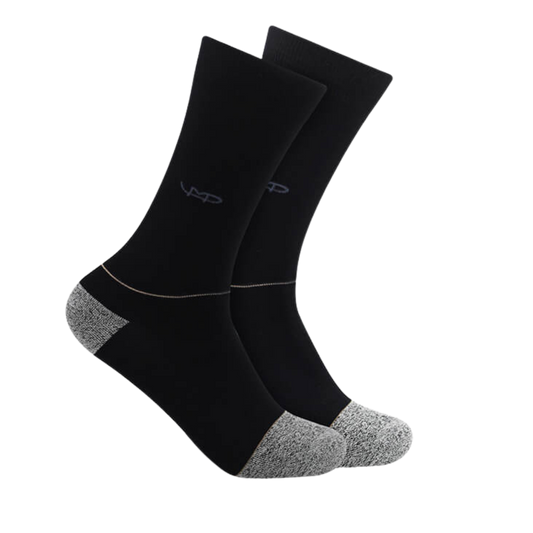
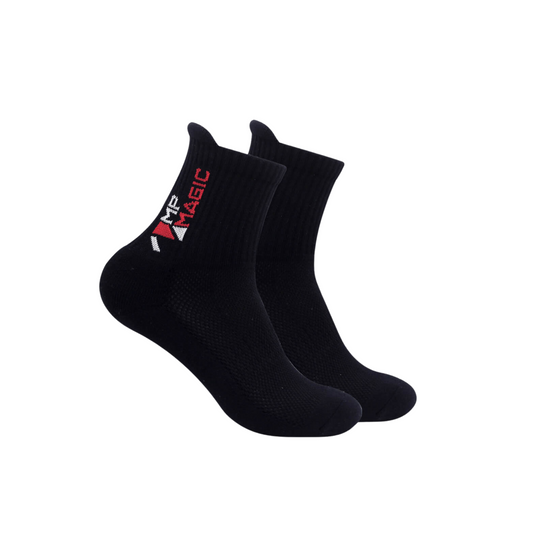
Our Classic 2.0 Merino Wool Crew Socks combine merino-rich fabric with targeted cushioning and mesh ventilation. The updated construction includes changes at the cuff and heel, making this a useful pair to consider for daily wear when your footwear has room for cushioning.
Lightweight merino for closer-fitting shoes
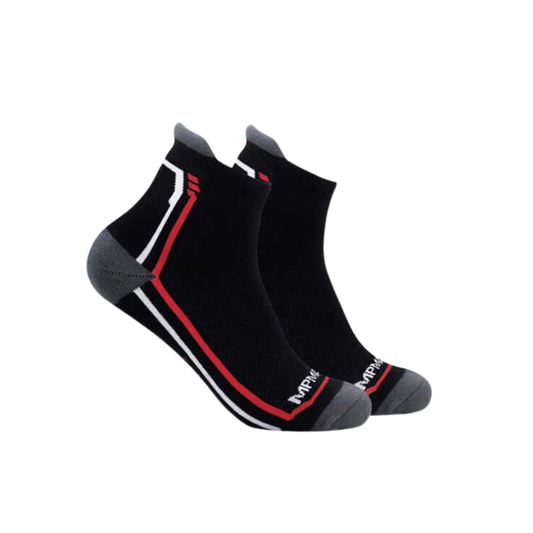
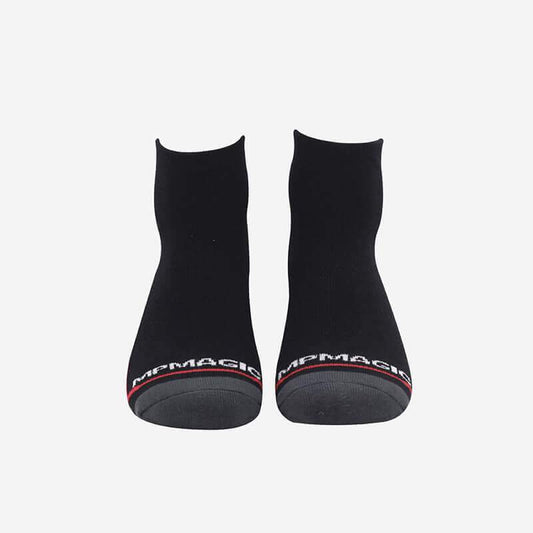
Our Lightweight Merino Wool Crew Socks use 74% merino wool with nylon-based MP Special Yarn and Lycra. Their lighter construction and mesh ventilation suit everyday and office outfits where a bulky sock is less comfortable.

Both styles are machine-washable. Follow the care label for your pair, and use our wool sock care guide to build a routine that keeps clean, dry pairs ready for the next cold morning.
Frequently Asked Questions
What are the best socks for cold weather?
The best match depends on your footwear, activity and time outdoors. Start with a well-fitting construction, consider merino blends, and choose thickness that leaves comfortable space inside the shoe.
Should winter socks always be thick?
No. A lighter pair may suit an indoor workday or a close-fitting shoe. Thicker socks are useful when both the conditions and the footwear allow them.
Are two pairs of socks warmer than one?
Adding a layer changes the fit as well as the insulation. If two pairs bunch or crowd the shoe, the combination is unsuitable. Try a single appropriate pair first; use a liner system only with footwear that accommodates it.
Why do my feet feel cold in warm socks?
Damp footwear, limited insulation in the shoe, a crowded fit or long periods without movement can all affect comfort. Socks are one part of the setup, so check the whole combination.
Build a Winter Combination You Can Wear All Day
Choose socks for the coldest part of your routine while keeping the indoor hours in view. Enough room, suitable coverage and a way to stay dry will do more for everyday comfort than simply choosing the thickest pair on the shelf.