You turn over the label on a favorite merino or cotton sock and find nylon beside the main fiber. It can seem surprising if you chose the pair for its natural material. Why add another fiber, and is nylon doing the same job as the small amount of stretch yarn listed next to it?
This guide explains nylon in socks, how it differs from elastane and polyester, and how to read a blend without treating one percentage as the whole story. The aim is to help you understand the construction you are buying.
Key Takeaways
- Nylon is a synthetic polyamide used in many cotton and wool blends.
- It can contribute strength and reinforcement, depending on the yarn and construction.
- Nylon and elastane are different fibers with different roles.
- A composition label does not show exactly where each yarn is placed or predict a sock's lifespan.
What Is Nylon?
Nylon belongs to the polyamide family of synthetic fibers. It can be made into yarns used alone or with other materials. A cotton-rich or merino-rich sock containing nylon is still a blend, even if the natural fiber is the reason you chose it.
Fiber manufacturer INVISTA describes strength, abrasion resistance and flexibility among the reasons nylon 6,6 is used in textile applications such as sewing threads. Those fiber properties help explain an engineering choice; they do not establish the abrasion life of every sock containing nylon.
Why Put Nylon in Cotton or Merino Socks?
Supporting the yarn and knit
A sock bends, stretches and rubs against the shoe repeatedly. Supporting yarns can help designers balance a desired soft surface with the structure needed for daily wear. The result depends on yarn size, twisting, placement and stitch construction, not just the presence of nylon on a label.
Reinforcement where wear occurs
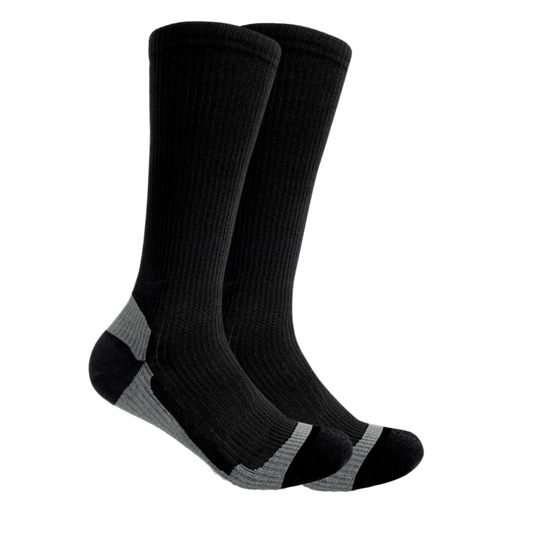
Some socks use reinforcement in high-contact areas such as the heel and toe. A blend percentage alone does not tell you whether the nylon is distributed throughout, plated with another yarn or concentrated in particular zones. Look for a specific construction description rather than assuming a map from the composition.
A balance of feel and function
A designer may retain a wool-rich feel while adding a supporting synthetic component. The appropriate question is whether the finished pair provides the fit, thickness and comfort you need. More natural fiber is not automatically better for every shoe, and more nylon is not automatically a stronger finished sock.

Nylon vs Elastane or Spandex
Elastane and spandex are names used for the elastic fiber category; Lycra is a brand associated with stretch fibers. Nylon is a different material. Although a knitted nylon fabric can stretch through its structure, that does not make nylon interchangeable with elastane.
| Label ingredient | How to think about it | What to check on the sock |
|---|---|---|
| Cotton or merino wool | A major influence on the chosen material feel | The actual surface, warmth and thickness |
| Nylon or polyamide | A possible structural or reinforcing ingredient | Construction details and wear at contact areas |
| Elastane, spandex or Lycra | An ingredient used for stretch and recovery | Heel position, cuff recovery and fit after washing |
Even a small stretch-fiber percentage can play a noticeable role. Do not judge its usefulness by comparing the percentage directly with the much larger cotton or wool share. The materials are contributing different things.
Nylon vs Polyester in Socks
Both are synthetic fibers, but they are not the same polymer or a universal substitute for each other. A sock using polyester may be engineered differently from one using nylon. Surface treatments and yarn design can also alter behavior.
If you are choosing a pair for a warm day, read the full blend and compare the thickness and shoe ventilation. Nylon on a label does not by itself mean sweaty, and polyester does not by itself establish quick drying. Our polyester vs cotton guide explains why absorption, wicking and evaporation should be considered separately.
Reading an MP Blend
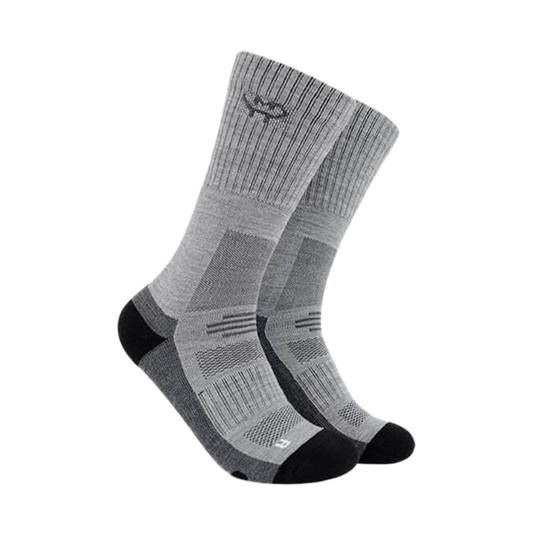
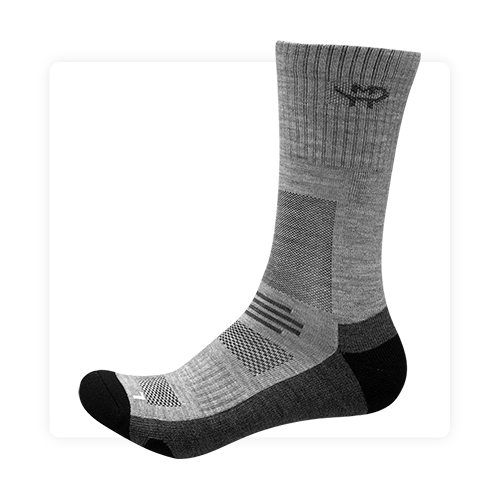
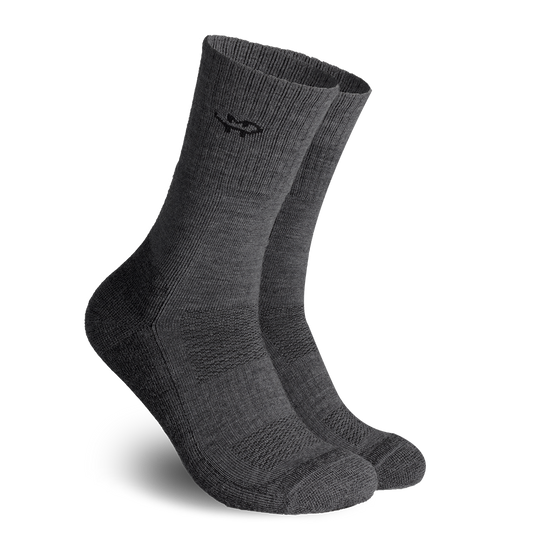
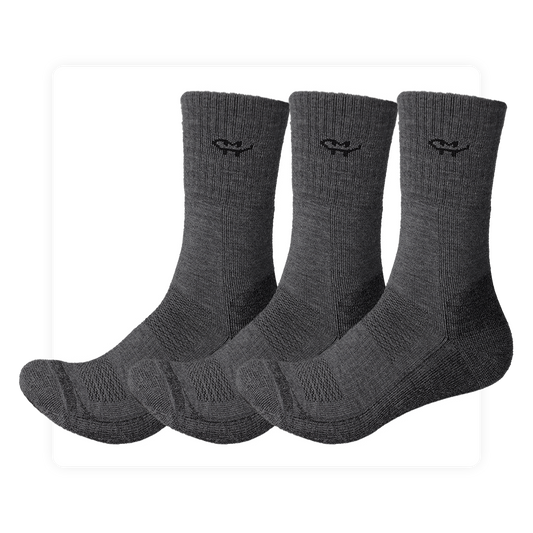
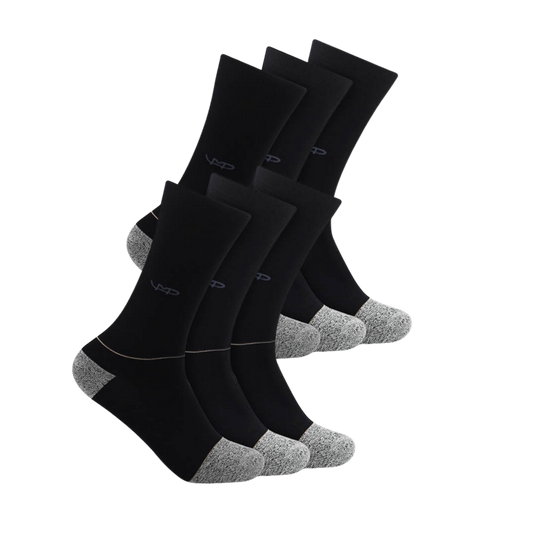
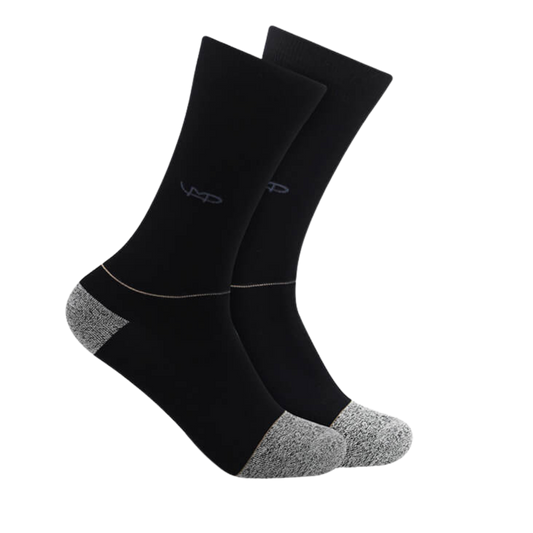
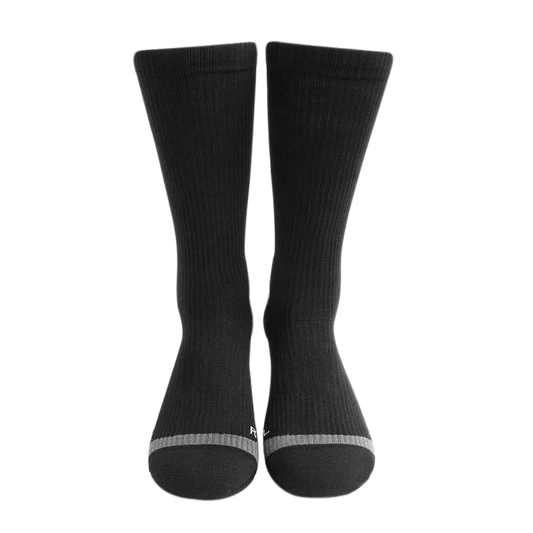
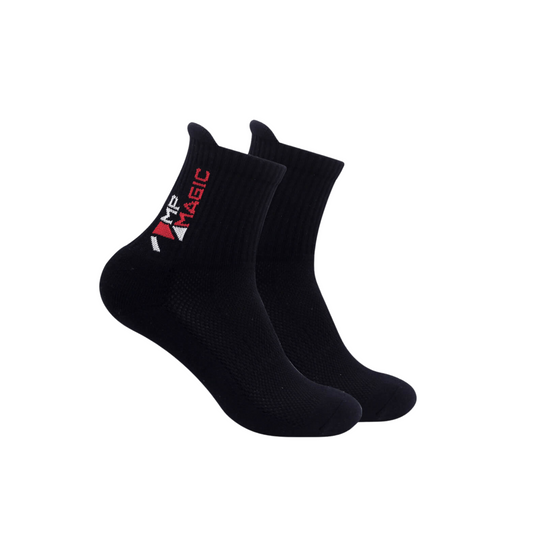
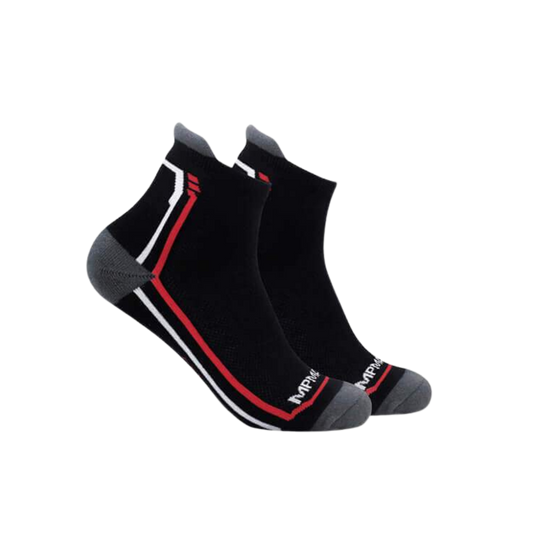
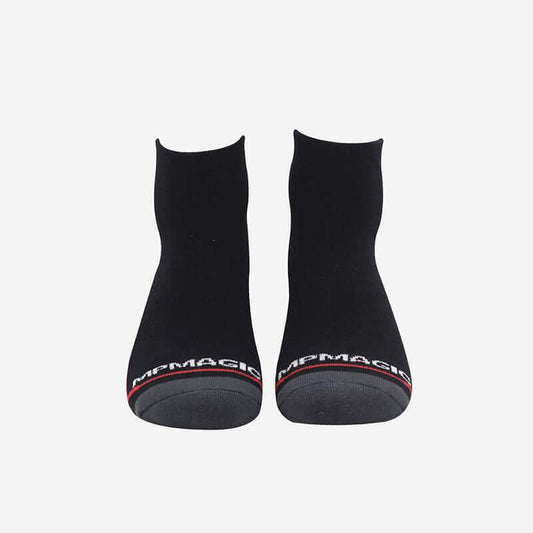
Our Lightweight Merino crew combines merino with nylon-based MP Special Yarn and Lycra. Our Supima Cotton crew combines cotton, nylon and Lycra. In each case, choose the finished knit around your shoes rather than ranking the pair solely by its largest ingredient.

How to Judge the Pair You Own
- Check that the heel sits correctly and the sole remains smooth.
- Notice whether the cuff recovers after normal wear rather than staying stretched.
- Inspect the heel and toes for thinning instead of looking only at surface pilling.
- Look inside the shoe for rough seams or worn lining if holes recur in one place.
- Follow the complete blend's care label, including limits on heat and bleach.
Nylon does not make a sock indestructible. Footwear, activity, fit and laundering still influence wear. Use our sock replacement guide to assess a pair's condition without assigning every blend a fixed lifespan.
Frequently Asked Questions
Are nylon blend socks pure nylon?
No. Read the composition. A blend can include cotton, wool and stretch fibers as well as nylon.
Is nylon the same as Lycra?
No. Nylon is a polyamide; Lycra is a brand used for stretch fibers. They may appear together in one sock.
Is a higher nylon percentage always better?
No. A percentage does not describe yarn placement, knit structure, fit or your intended use. Compare the finished design.
Does nylon guarantee that socks will not get holes?
No. Reinforcement can be part of a construction, but no ingredient removes all wear from shoes, rough surfaces, strain and care.